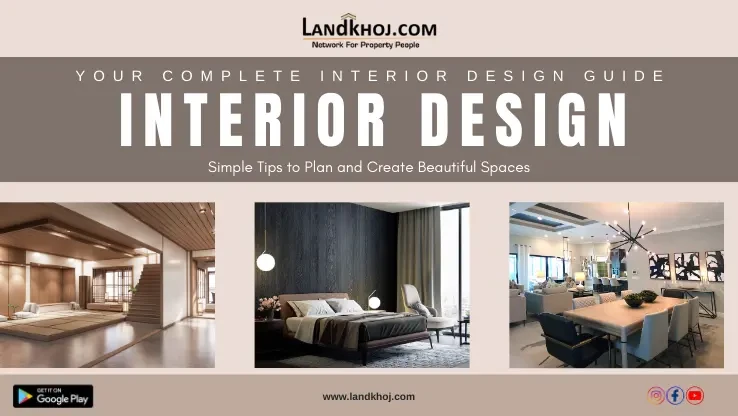
Your Complete Interior Design Guide: Simple Tips to Plan and Create Beautiful Spaces
Introduction
Let's face it, at one point or another, every one of us has thought about interior design. Perhaps you have just moved to a new house, or maybe you're looking for a brand new life in a familiar place. Sometimes it is a matter of planning a villa, and other times it's about making your office at least somewhat less boring. Regardless of why you're interested, good design transforms everything. Suddenly, your house feels inviting. Your workspace, at least, contributes to your productivity. Life just runs much better.
In India, interior design is no longer merely a trend but something that is now widely available to us. People are asking for more than just a few chairs and a bunch of naked walls. They are looking for good storage solutions, interesting lighting, spatial planning and materials that will last over time. They want their homes and offices to reflect their true selves and not just be a photo taken from a catalogue. If you get it right when you are on the receiving end, then it is not just about looking good. It will enhance the value of your property and make everyday life that much easier in the long run.
This complete interior design guide has been written to help you understand everything you need to know before starting any design project. You will learn:
- Basic rules of interior design
- How to plan your interiors step-by-step
- Different design styles
- Room-by-room interior ideas
- How to select materials and finishes
- How colours and lighting affect a space
- Budgeting tips with approximate costs
- Latest trends in Indian homes & offices
- How to hire professionals
- Common mistakes to avoid
- Maintenance tips
Whether you are new in this field or working on an interior project with a view of the future, this guide is meant to simplify the process and improve the experience.
And if you are interested in starting your interior design journeys, Landkhoj can connect you with trusted interior designers, POP specialists, modular kitchen teams, and renovation workers across India who are verified, reliable, and eager to help you build your new space.
Basics of Interior Design: Simple Guidelines Every Person Should Know
Let's face it, designing a room can seem intimidating. However, a few smart guidelines can make the entire process much easier, and far less stressful. Once you see these and practice them, you’ll find your rooms really do look and feel better.
How to Find Balance with Furniture and Decor in a Room
Balance is really important in any room. The moment you walk in, you can tell if something feels wrong — maybe everything is pushed to one side, or one corner looks too heavy. That uneven feeling is what we want to avoid
There are a number of ways to achieve this:
- Symmetrical balance: Think of two sides being equal and looking like a mirror image. A classic, simple and clean balance that just works.
- Asymmetrical balance: Things don’t exactly match, but look and feel balanced. It keeps things interesting without looking off balance.
- Radial balance: Everything can be balanced around a central core, like a chandelier or round table, and radiates out from that.
Always check the size of your furniture before buying anything. Dragging in a gigantic couch that barely makes it through the doorway? Not exactly the look we want. Make sure everything will actually work within each space and its proportion. For example:
- A huge sofa in a small room will look overpowering.
- A tiny rug in a large hall will look misplaced.
- A very small bed in a big master bedroom will look odd.
Why Repeating Colours and Patterns Makes Rooms Look Better
Repeating a few colours or textures helps a room feel connected. For example:
- If your rug has blue, repeat blue in cushions.
- If your bedroom has wooden tones, repeat the same tone in side tables.
- If your dining area has a brass chandelier, use brass handles or décor accents.
This rhythm creates harmony and flow.
How to Create a Focal Point in Any Room
Every room should have one strong visual area called a focal point. Examples include:
- A TV unit wall
- A stylish headboard
- A feature wall
- A statement light fixture
- A POP ceiling design
- A piece of art
- A fireplace (in larger homes)
Once you choose the focal point, build the rest of the décor around it for a clean and intentional look.
How to Match Colours and Materials the Right Way
Harmony means everything should look like it belongs together.
A quick rule:
- Use 2 main colours
- Add 1 accent colour
- Reuse materials, whether it is wood, metal or fabric — in multiple places in the room.
This creates continuity. Mixing things up is great for visual interest—variety is fun! Pair a light wall with dark furniture or soft fabrics with metal accents—these are the little changes that make a space feel livable.
How to Plan Your Interior Design Step-by-Step
Think about how you will actually use the space. Think through your daily routine and what you do with the space..
First Step: Decide How You Will Use the Space
Start by understanding your lifestyle and needs. Ask questions like:
- Who lives here?
- Will you work from home and need a quiet desk space or just one for bills?
- Are you always entertaining friends?
- Would you want more storage?
- Would you like simple solutions or have a bit of luxury?
- Is the room usually noisy, or is it your space to relax?
Everyone's household is a little different. A family with children will need safer materials and additional storage. A couple just starting out might want a cool, modern, clean look.
Measure Your Room Before Buying Anything
Before buying furniture online or in a store, measure:
- Length, width, height
- Window & door positions
- TV placement
- Electrical points
- Sunlight direction
Fixed areas (columns, beams, balconies)
A simple sketch can help you avoid mistakes and extra expenses.
How to Make a Practical Interior Design Budget
A common interior budget breakdown for Indian homes looks like this:
- 40% Modular kitchen + wardrobes
- 20% Civil work, electricals, plumbing
- 15% Furniture
- 10% Lights & appliances
- 10% Décor
- 5% Contingency
This helps keep expenses under control.
Plan Your Timeline (Especially if You Live in the House)
A realistic timeline makes everything easier. A full home interior usually takes:
- 6–10 weeks depending on design & materials
- Faster for ready-made solutions
- Longer if custom carpentry is involved
If you're staying in the home during renovation, plan room-by-room.
Separate Your Needs from Your Wants
This avoids overspending.
Needs:
Storage, lighting, kitchen essentials, furniture, electrical work.
Wants:
Designer wallpapers, luxury décor, expensive artefacts.
Start with needs → add wants later.
Popular Interior Design Styles You Can Choose From
Different styles suit different personalities and lifestyles. Here are the most popular ones in India:
Modern / Contemporary Style
-
Sleek lines
- Neutral colours
- Smooth finishes
- Minimal clutter
- Statement lighting
Great for urban apartments.
Minimalist Style
- “Less is more” philosophy
- Clean forms
- Few colours
- Open spaces
- Hidden storage
Perfect for compact homes and those who like simplicity.
Traditional Indian Style
- Solid wood furniture
- Brass & gold accents
- Ornate carvings
- Warm colours
- Traditional patterns
Ideal for families who want a classic look.
Scandinavian Style
- Light wood furniture
- Soft pastel colours
- Natural fabrics
- Airy & bright
- Simple and cosy
Very popular among young Indian homeowners.
Industrial Style
- Exposed pipes
- Concrete finishes
- Black metal accents
- Rustic textures
- Loft-like look
Works well in studios, cafes, and bachelor pads.
Fusion / Transitional Style
Mix of modern and traditional.
Easy to maintain and perfect for Indian families.
Interior Design Tips for Every Room in Your Home
Let’s go room by room.
How to Design a Comfortable Living Room
- Choose a sofa that fits the room size
- Add a rug to define the space
- Combine ambient + task + accent lighting
- Make a feature wall (TV, artwork, texture)
- Keep good walking space
- Add plants, cushions, curtains for warmth
How to Design a Calm and Beautiful Bedroom
-
Start with a comfortable bed
-
Add soft lighting
-
Use soothing colours
-
Add adequate wardrobe storage
-
Choose curtains based on privacy needs
-
Keep décor minimal for relaxation
How to Plan a Functional Modern Kitchen
- Follow the work triangle rule
- Keep enough drawers and cabinets
- Choose durable countertops
- Add under-cabinet lights
- Good ventilation is essential
- Waterproof materials near sinks
Simple Interior Tips for Dining Areas
- Place the dining table centrally
- Add a chandelier or pendant light
- Use warm lighting for atmosphere
- Add a sideboard for storage
- A mirror can make the space look bigger
Bathroom Design Tips for Safety and Comfort
- Good waterproofing
- Anti-skid tiles
- Adequate lighting
- Proper ventilation
- Shelves or niches for toiletries
- Space-efficient vanity unit
Easy Design Ideas for a Kids’ Room
- Soft, safe materials
- Bright or pastel colours
- Zoned spaces: study + play + sleep
- Multi-functional storage
- Creative walls (chalkboard, pinboard)
Interior Design Tips for Offices and Workspaces
- Reception: Confident and welcoming
- Workstations: Clean, bright, ergonomic
- Cabins: Professional, simple, comfortable
- Meeting Rooms: Good acoustics + lighting
- Breakout Zones: Relaxing, colourful
Good office interiors improve productivity and brand image.
Common Interior Materials and Where to Use Them
Materials determine durability and style.
Flooring Materials
- Vitrified tiles
- Laminate flooring
- Wooden flooring
- Marble
- Granite
- SPC flooring
Wall Finishes
- Emulsion paint
- Wallpaper
- Textured paint
- Wood panelling
- POP wall panels
Ceiling Materials
- POP
- Gypsum
- Wooden ceilings
- PVC
Countertop Materials
- Granite
- Quartz
- Solid surface
Upholstery Fabrics
- Cotton
- Linen
- Velvet
- Leatherette
How Colours, Lighting and Textures Change a Space
These three elements shape the mood of any room.
Choosing Colours
Use the 60-30-10 rule:
- 60% → Main colour
- 30% → Secondary colour
- 10% → Accent colour
Popular Indian choices: beige, cream, grey, olive, charcoal, pastels.
Lighting Layers
- Ambient: Main lights
- Task: Study, kitchen, reading
- Accent: Decorative lights, spotlights
Warm light for homes, neutral white for offices.
Texture Mixing
Mixing textures adds depth:
- Wood + metal
- Matte + glossy
- Cotton + velvet
- Stone + fabric
Interior Design Budget Guide (With Sample Costs)
Approximate Indian pricing:
- Basic 2BHK interiors: ₹4–7 lakh
- Mid-range 3BHK interiors: ₹8–15 lakh
- Premium interiors: ₹18 lakh+
- Spend more on:Kitchen, wardrobes, lighting, flooring.
Save on: Décor pieces, wall art, curtains.
Simple Smart Home Upgrades You Can Add
- Smart bulbs
- Smart fans
- Smart locks
- Video doorbells
- Smart home hubs
- App-controlled lighting
Small upgrades make daily life easier.
Eco-Friendly and Healthy Interior Design Tips
- Use low-VOC paints
- Natural materials
- Add indoor plants
- Prioritise ventilation
- Choose energy-saving appliances
- Use FSC-certified wood products
Latest Interior Design Trends in India (2024–25)
- Earthy tones
- Warm neutrals
- Curved furniture
- Sustainable materials
- Japandi style
- Minimalist luxury
- Statement lighting
- Smart, hidden storage
- Mixed textures
Should You Hire an Interior Designer or Do It Yourself?
DIY is good for:
- Décor
- Painting small spaces
- Rearranging furniture
Hire a professional for:
- POP & ceiling work
- Modular kitchen
- Electrical & plumbing
- Full home design
- Office interiors
- Complex carpentry
Landkhoj connects you with trusted professionals—designers and contractors you can rely on.
Common Interior Design Mistakes and How to Avoid Them
- Buying furniture before measuring
- Ignoring lighting planning
- Choosing colours last
- Using too many design styles
- Overcrowding the room
- Not planning storage
- Ignoring natural light
How to Maintain Your Interiors for Years
- Clean surfaces based on material
- Repaint every few years
- Tighten screws and hinges
- Avoid water leakage
- Vacuum upholstery
- Refresh décor seasonally
Conclusion: Start Designing Your Dream Space Today
Let's be clear, interior design is not just about what a space looks like, it is also about creating a space that works for your life, expresses your aesthetics, and feels and functions well. With a little planning, a practical budget, quality selections, and options that fit into your life, you can turn a space into something warm, practical and inviting for you and your guests.
Maybe you are looking for clean, modern minimalism. Maybe you prefer the comforts of a space that is classic and traditional. Or perhaps you want a little bit of everything—traditional and contemporary with a hint of luxury. No matter the case, you have options. Lots of options.
So, wherever you are ready to start, Landkhoj has partnered with many trusted interior designers, POP experts, modular kitchen specialists, and renovation contractors throughout India. Each professional contractor or designer on the Landkhoj list has been vetted and verified, and will provide excellent service and collaborative support throughout your process.
FAQs
Q1: How much does interior design cost in India?
Ranges from ₹4 lakh to ₹20 lakh+, depending on size and style.
Q2: How long does interior work take?
Typically 6–12 weeks.
Q3: What is the most important part of interiors?
Planning — layout, storage, colours, and lighting.
Q4: Should I do interiors before shifting?
Yes, it’s faster, cleaner and easier.
Q5: Which colours make a room look bigger?
Light colours: whites, beiges, soft pastels, greys.